Imagine two friends.
想象一下,有两位朋友。
Both decide to invest RM800,000 in Johor. Both buy in the same year. Same state, same economy, same timing — on paper, the same bet.
两人都决定在柔佛投资 80 万令吉,都在同一年出手。同一个州,同一个经济体,同一个时间点——纸面上,是同一笔押注。
Five years later, one of them gets a message every few months: "Hi, is the unit still available? We'd like to renew." The rent has quietly gone up twice. The other checks a property portal every week, drops the asking rent a little more each time, and still can't find a tenant.
五年后,其中一位每隔几个月就会收到一条信息:"您好,单位还在出租吗?我们想续租。"租金已经悄悄涨了两次。另一位则每周都去看房产平台,一次次调低租金,却还是找不到租客。
Same state. Same economy. Same timing. So why are the results completely different?
同一个州,同一个经济体,同一个时机。为什么结果却截然不同?
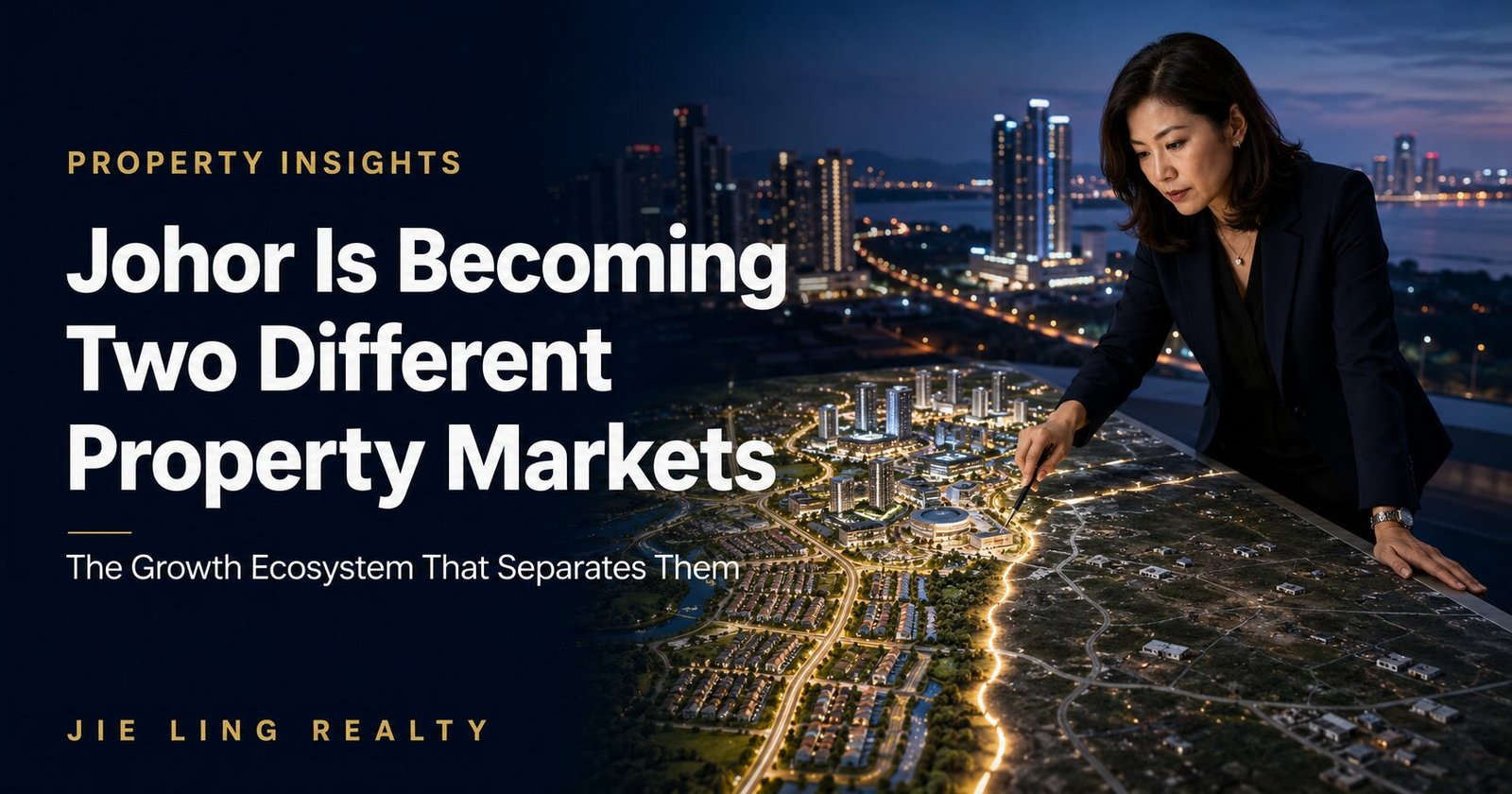
Because Johor is no longer one property market. It is becoming two very different markets. That is what most people fail to understand — and it is the one lesson this episode exists to teach.
因为柔佛已经不再是一个统一的房产市场,而正在分裂成两个截然不同的市场。这正是大多数人没有理解的地方——也是这一期唯一要教给你的一课。
- Big catalysts — the RTS, the JS-SEZ, data centres — don't lift Johor evenly. Different areas are building different economic ecosystems, and they will grow at different speeds.
- Today's tool is the Growth Ecosystem Model: five pillars that decide whether an area's growth is real and durable, or borrowed and temporary.
- By the end, you'll stop asking "Will Johor grow?" and start asking a sharper question instead.
- 大型催化剂——RTS、新柔特区、数据中心——不会均匀地惠及整个柔佛。不同片区正在建立不同的经济生态,增长速度自然也各不相同。
- 本期的工具是增长生态模型:五个支柱,决定一个片区的增长是真实持久的,还是借来的、一时的。
- 读完本期,你会停止问"柔佛会不会增长?",转而问一个更犀利的问题。
New here? Start with our JS-SEZ overview, the Five Forces Filter and the RTS Walkability Rule.第一次来?建议先看 特区概览、五力筛选法与 RTS 步行法则。
Why so many investors think Johor moves as one market为什么这么多投资者以为柔佛是"一个市场"
It's an understandable belief, and the last three episodes explain why it's so tempting. The RTS is real. The JS-SEZ is real. The data-centre money pouring into Kulai and Sedenak is real. So the story writes itself: a five-minute train to Singapore, a 3,500 km² tax zone, billions in AI infrastructure — surely every property in the state benefits?
这是一个很好理解的想法,前三期也解释了它为什么如此诱人。RTS 是真的,新柔特区是真的,涌入古来与士乃纳的数据中心资金也是真的。于是故事顺理成章地写好了:一条五分钟到新加坡的捷运、一个 3,500 平方公里的税务特区、数十亿美元的 AI 基建投资——全州的每一套房子,肯定都能沾光吧?
"RTS will raise every property's value. JS-SEZ will make the whole of Johor appreciate. Data centres will benefit every nearby development.""RTS 会推高每一套房子的价值。新柔特区会让整个柔佛升值。数据中心会惠及每一个附近的项目。"
Each catalyst is real but selective. It creates the conditions for growth in specific corridors — and quietly bypasses everywhere else.每一股催化剂都真实存在,但有选择性。它只在特定走廊上创造增长的条件——而悄悄绕过其他所有地方。
This is the same oversimplification behind every episode so far — just applied to the whole state at once.这正是此前每一期都在拆解的同一种简化思维——只是这次,被套用在了整个州身上。
This is exactly the oversimplification we've been unpacking since our first article on JS-SEZ — just scaled up from "one project" to "one state." A catalyst doesn't spread value evenly across a map. It flows toward the places that can actually use it: places with jobs, with people, with reasons to keep growing after the ribbon-cutting ceremony ends.
这正是我们从第一篇特区文章就开始拆解的那种简化思维——只是这一次,规模从"一个项目"放大到了"一整个州"。催化剂不会均匀地把价值洒满地图,它会流向那些真正能"接住"它的地方:有就业、有人口、剪彩仪式结束后依然有理由继续增长的地方。
The Growth Ecosystem Model增长生态模型
So how do you tell a real ecosystem from a good brochure? Use one memorable framework: the Growth Ecosystem Model. It scores any Johor area on five pillars. Sustainable growth happens only when these five support each other — pull one out, and the rest weaken too.
那要怎么分辨真实的经济生态,和一本漂亮的售楼书?用一个好记的框架:增长生态模型。它从五个支柱为任何柔佛片区打分。只有当这五者相互支撑,可持续的增长才会发生——抽走其中一根,其余的也会随之动摇。
Pull one pillar out and the beam above starts to tilt — growth built on one pillar alone rarely lasts.抽走任何一根支柱,上方的横梁都会开始倾斜——只靠单一支柱撑起的增长,很少能持久。
Employment就业
Are quality jobs being created — today, not on a masterplan? Jobs are what turn a location on a map into a place people actually need to live near.高质量的就业岗位是否正在创造中——是今天,而不是总体规划图上的未来?就业,是把地图上的一个坐标变成人们真正需要住在附近的地方的关键。
Infrastructure基础设施
Is transport genuinely improving daily accessibility — or is it a line on a future map? Built infrastructure changes lives. Promised infrastructure only changes brochures.交通是否真的在改善日常出行——还是只是未来地图上的一条线?建成的基建能改变生活,承诺中的基建只能改变售楼书。
Business Investment企业投资
Are companies expanding into this area — opening offices, hiring, building? Business investment is the surest sign that an ecosystem is compounding, not just being announced.是否有企业正在扩张进驻这个片区——开设办公室、招聘、兴建?企业投资,是一个生态正在复合增长、而不只是被"宣布"存在的最可靠信号。
Population Growth人口增长
Will more people realistically choose to live here — because of the jobs, the infrastructure and the daily life the first three pillars create? Rooftops follow reasons, not hope.在前三根支柱创造出的就业、基建与日常生活的加持下,是否真的会有更多人选择住在这里?人口跟着理由走,不跟着期望走。
Supply Balance供应平衡
Is future housing supply likely to outpace demand? A brilliant ecosystem can still be undermined by too many identical towers chasing the same tenants.未来的住房供应,是否可能跑赢需求?就算生态再出色,也可能被太多同质化的高楼——争抢同一批租客——所拖累。
Here's how the chain actually connects, in the order it usually happens on the ground:
这条链条在现实中通常是这样连接起来的:
Infrastructure isn't in this chain by accident — it's the road every other link travels on. Without it, the chain still has to find another way through.基础设施没有出现在这条链上,并非疏漏——它是这条链每一环都要经过的那条路。没有它,这条链依然得另找出路才能走通。
Want to See Which Areas Score Highest?想知道哪些片区得分最高?
This episode teaches the model. The complimentary 2026 Johor Property Investment Report applies it — across every engine reshaping Johor, in English or 中文.这一期教你这套模型。免费的《2026 柔佛房产投资报告》,则把它用在了正在重塑柔佛的每一股力量上,中英文任选。
- RTS Link
- JS-SEZ
- Data Centres
- Infrastructure
- Growth Corridors
- Investment Risks
- Investor Checklist
- RTS 捷运
- 柔新特区
- 数据中心
- 基础建设
- 增长走廊
- 投资风险
- 投资者检查清单
Two fictional areas, same headline catalyst两个虚构片区,同一则头条催化剂
To see the model in action, meet two composite areas — teaching examples, not real projects or developers. Both sit inside the same headline catalyst zone. Both were launched around the same price. Run them through the five pillars, and a very different picture appears.
为了让你看清这套模型如何运作,认识两个"合成片区"——它们是教学示例,并非真实项目或发展商。两者都位于同一个头条催化剂覆盖的区域内,推出价格也相近。但把它们放进五大支柱一测,画面就完全不同了。
The Ecosystem"生态型"片区
- Growing employment nearby
- Better, improving connectivity
- New businesses moving in
- Cafés, schools, daily amenities
- Healthy, steady rental demand
- 附近就业持续增长
- 连接性更好,且持续改善
- 新企业不断进驻
- 咖啡馆、学校、日常配套齐全
- 租赁需求健康且稳定
The Postcode"邮编型"片区
- Attractive marketing, similar launch price
- Beautiful showroom, stunning renders
- Few nearby jobs
- Limited daily amenities
- Slower rental demand, high future supply
- 营销漂亮,推出价格相近
- 售楼处华丽,效果图惊艳
- 附近就业稀少
- 日常配套有限
- 租赁需求偏弱,未来供应量高
| Pillar支柱 | Area A · The EcosystemA 区 · 生态型 | Area B · The PostcodeB 区 · 邮编型 |
|---|---|---|
| Employment就业 | ✓ growing, operating nearby附近就业持续增长 | ✗ few jobs within reach周边可及的岗位很少 |
| Infrastructure基础设施 | ✓ improving daily accessibility日常通勤持续改善 | ✗ still mostly a masterplan line多半还是规划图上的一条线 |
| Business Investment企业投资 | ✓ new businesses moving in新企业不断进驻 | ✗ launch buzz, little else yet开盘热度之外,暂无其他动静 |
| Population Growth人口增长 | ✓ people genuinely choosing to live here人们真心愿意住在这里 | ✗ mostly investor units, few residents多为投资单位,实际住户不多 |
| Supply Balance供应平衡 | ✓ limited comparable new supply同类新增供应有限 | ✗ high future supply, similar towers rising未来供应量高,同类高楼林立 |
Composite illustration for teaching purposes — not real transactions, developers or specific projects.教学用合成示例——并非真实交易、发展商或特定楼盘。
Your Investor Checklist你的投资者检查清单
Keep this on your phone. Before you buy in any Johor area, run it through the five pillars — as five plain questions.
把它存在手机里。在你于任何柔佛片区出手前,先用这五个朴素的问题,把五大支柱走一遍。
Where will future jobs come from?未来的就业,会从哪里来?
Is infrastructure already improving daily life — or is it still a promise?基础设施是否已在改善日常生活——还是仍只是一个承诺?
Are businesses moving into the area?是否有企业正在进驻这个片区?
Is housing supply growing faster than demand?住房供应的增长速度,是否快过需求?
Would people genuinely choose to live here every day?人们是否真心愿意每天生活在这里?
Any one of these five questions can be answered with a "maybe." What separates Area A from Area B is how many of the five answer "yes, and it's already happening."这五个问题中的任何一个,单独看都可能只是"也许"。真正把 A 区和 B 区区分开的,是有多少个问题的答案是"是的,而且已经在发生。"
So — the two friends from the opening? Same RM800,000, same year, same state. But one bought into a place where employment, infrastructure, business investment, population and supply were quietly reinforcing each other. The other bought a beautiful render, standing mostly alone. The catalyst was real for both of them. Only one had an ecosystem ready to catch it.
那么——开头那两位朋友呢?同样的 80 万令吉,同一年出手,同一个州。但一位买进了一个就业、基建、企业投资、人口与供应正悄悄相互支撑的地方;另一位,买下的只是一张漂亮的效果图,孤零零地立在那里。催化剂对两人而言都是真实的,只有一位,早已备好一个生态去接住它。
Which friend's phone would you rather have?
你更想成为哪一位朋友?