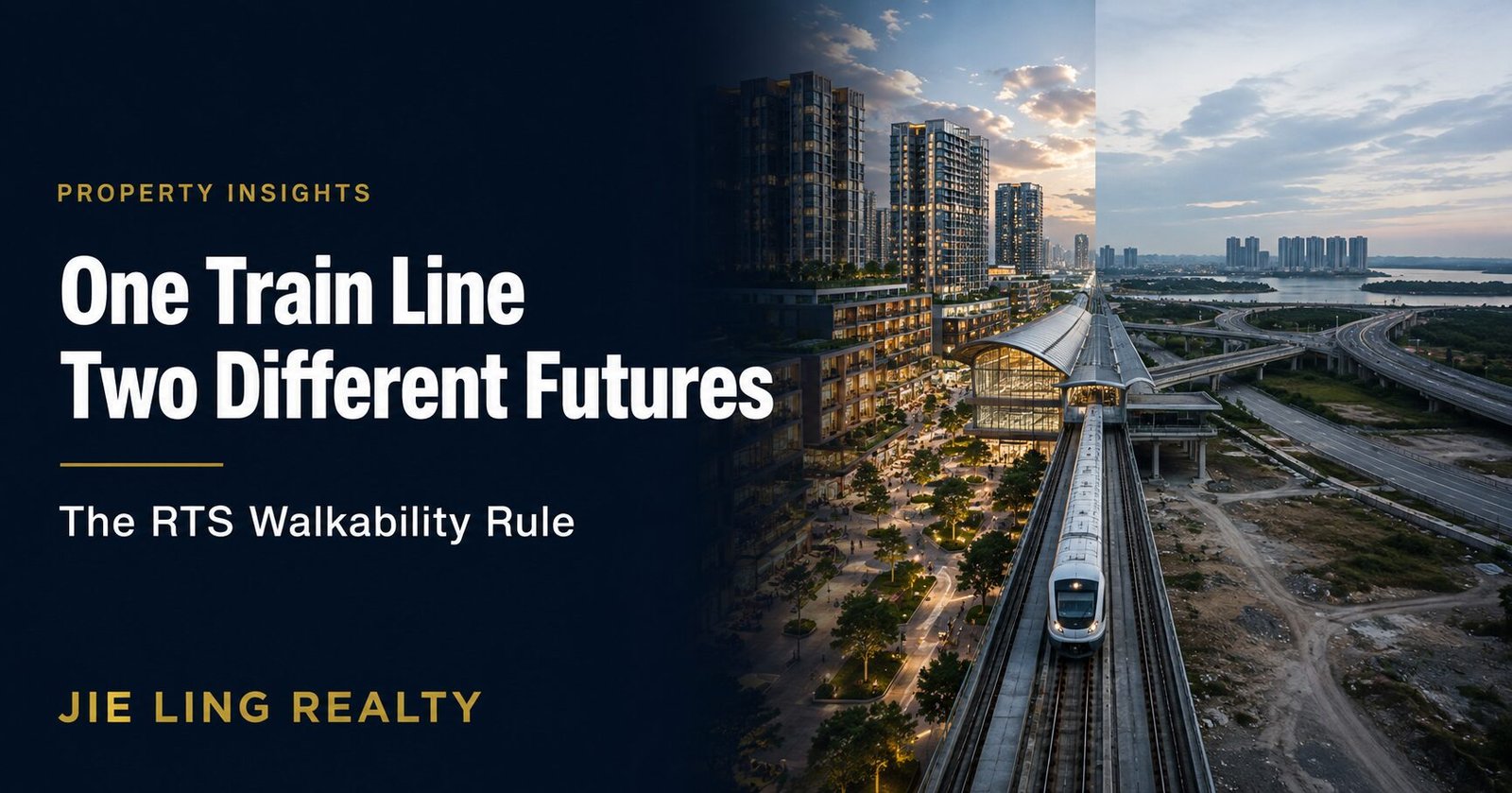
Imagine two cafés.
想象一下,有两家咖啡馆。
One sits directly opposite the future RTS station. The other is only 800 metres away. When the RTS opens, both owners believe the same thing: the customers will flood in.
一家,正对着未来的 RTS 车站。另一家,只在 800 米开外。当 RTS 通车时,两位老板都相信同一件事:客人会蜂拥而至。
Five years later, one café has people queuing every morning. The other is quietly struggling to survive.
五年后,一家咖啡馆每天早上都排着队。另一家,则在苦苦支撑。
Same city. Same train line. So why did one become a destination, while the other became just another café?
同一座城市,同一条轨道。为什么一家成了目的地,另一家却只是"又一家咖啡馆"?
The answer explains one of the biggest misconceptions investors make when buying property near the RTS — and once you see it, you can't unsee it.
这个答案,揭示了投资者在 RTS 旁买房时最大的误区之一——而一旦你看懂了它,就再也无法忽视。
- Being near the RTS station is not the same as benefiting from the RTS.
- What decides the difference isn't the distance on a map. It's walkability, daily convenience, jobs and genuine tenant demand.
- Today you'll learn a reusable tool for it: the RTS Walkability Rule™ — five questions to ask before you buy near any station.
- 靠近 RTS 车站,和受惠于 RTS,是两回事。
- 决定差别的,不是地图上的距离,而是步行便利、日常配套、就业机会与真实的租客需求。
- 本期教你一个可反复使用的工具:RTS 步行法则™——在任何车站旁出手前,先问的五个问题。
New here? Start with our JS-SEZ overview and the Five Forces Filter.第一次来?建议先看 特区概览 与 五力筛选法。
The train doesn't create value. People do.创造价值的不是火车,而是人。
Here's the trap. A brochure says "300 metres to the RTS," and our brain fills in the rest: crowds, tenants, rising rents. But the RTS itself doesn't spend money at your café or rent your apartment. People do — and only if the walk between the station and your door is one they'll actually take, every single day, without thinking about it.
陷阱就在这里。售楼书写着"距 RTS 300 米",我们的大脑便自动补上后半句:人潮、租客、水涨船高的租金。可是,RTS 本身不会来你的咖啡馆消费,也不会来租你的公寓。是人——而且,前提是从车站到你家门口的这段路,是他们每天愿意走、不假思索就会走的路。
Distance on a map is not the same as distance on foot. A café 200 metres away across a hot, shadeless eight-lane road can feel further than one 500 metres away along a covered, shop-lined walk. The map says one is closer. Your feet disagree — and your feet decide.
地图上的距离,和脚下的距离,是两码事。一家在 200 米外、却要横穿一条烈日下毫无遮阴的八车道马路的咖啡馆,体感上可能比 500 米外、沿着有盖走廊与商铺一路走过去的那家更远。地图说前者更近,你的脚却不这么认为——而做决定的,是脚。
The RTS creates opportunity. Walkability creates daily demand. Daily demand creates property value. Skip the middle step, and the last one never arrives.RTS 创造机会。步行便利创造日常需求。日常需求创造房产价值。少了中间那一步,最后一步永远不会到来。
Demand doesn't fade evenly with distance — it falls off a cliff the moment the walk stops being effortless.需求不会随距离均匀减弱——一旦这段路不再"轻松好走",需求便断崖式下跌。
How value actually travels down the line价值,究竟如何沿着这条线传导
A train line lifts property value through a chain of steps — not a single leap. The RTS makes cross-border business easier, which gives companies the confidence to invest, which creates jobs, which creates people who need somewhere to live near the line, which finally lifts what your unit is worth.
一条轨道抬升房价,靠的是一连串环节,而不是一步登天。RTS 让跨境往来更便利,企业因此更有信心投资,投资带来就业,就业创造出"需要住在线路附近"的人,最终才抬升你那套单位的价值。
A chain is only as strong as its weakest link. A location near the station but far from jobs and convenience quietly snaps the middle — and the value never reaches the end.链条的强度,取决于最弱的一环。一个"靠近车站、却远离就业与配套"的地段,会在中间悄悄断裂——价值也就传不到终点。
The RTS Walkability Rule™RTS 步行法则™
This is the tool to remember. Five plain questions. If a property near the RTS answers yes to most of them, the chain above is likely to complete. If it can't, "near the RTS" is just a line in a brochure.
这就是要记住的工具。五个朴素的问题。如果一套 RTS 旁的房产,对其中大多数问题都能答"是",上面那条链条就很可能走得通;如果答不上来,"靠近 RTS"就只是售楼书上的一句话。
Can people comfortably walk there — every day?人们能不能舒服地走到那里——而且是每天?
Not "is it close." Is the walk shaded, safe, flat, and pleasant enough to repeat 700 times a year? A covered link changes everything; a highway crossing quietly kills it.重点不是"近不近",而是这段路有没有遮阴、安不安全、平不平坦、够不够舒服,让人一年愿意重复走 700 趟?一条有盖连廊能改变一切;一个要横穿高速公路的路口,则会悄悄毁掉它。
Will commuters naturally pass your property?通勤的人流,会不会自然经过你的房产?
Foot traffic is a river. A shop or home on the path between the station and where people live and work catches the current. One street off that path might as well be a mile away.人流就像一条河。一间店铺或一套住宅,只要位于车站与人们居住、工作地点之间的动线上,就能承接这股水流。哪怕只偏离动线一条街,效果也可能天差地别。
Are everyday conveniences nearby?日常配套,是否近在咫尺?
Restaurants, cafés, a supermarket, a clinic, a pharmacy. A tenant doesn't rent a train station — they rent a life. The RTS gets them to Singapore; the shop downstairs is why they stay.餐馆、咖啡馆、超市、诊所、药房。租客租的不是一座车站——他们租的是一种生活。RTS 把他们送去新加坡;而楼下的那间店,才是他们愿意留下来的理由。
Are there enough jobs to support long-term demand?周边有没有足够的就业,支撑长期需求?
A train can carry workers away as easily as it brings them in. Real, durable rental demand comes from jobs — offices, industry, an SEZ zone, a hospital — near enough that people want to live beside them.一条轨道,既能把上班族带进来,也能同样轻易地把他们带走。真正持久的租赁需求,来自就业——写字楼、工业、特区、医院——而且要近到让人愿意住在旁边。
Would a tenant genuinely choose this over the alternatives?在众多选择中,租客会不会真心选它?
Near a busy station, your unit competes with dozens of similar ones. If a tenant can get a nicer, cheaper, closer option one block over, "near the RTS" won't save your rent — or your resale.在繁忙的车站旁,你的单位要和几十套相似的房子竞争。如果租客在隔壁一栋楼就能找到更好、更便宜、更近的选择,"靠近 RTS"救不了你的租金——也救不了你的转售。
Before You Buy Near the RTS…在你于 RTS 旁出手之前……
Download the complimentary 2026 Johor Property Investment Report — the same thinking, applied across every engine reshaping Johor, in English or 中文.下载免费的《2026 柔佛房产投资报告》——把同一套思考方式,用在正在重塑柔佛的每一股力量上,中英文任选。
- RTS Link
- JS-SEZ
- Data Centres
- Infrastructure
- Growth Corridors
- Investment Risks
- Investor Checklist
- RTS 捷运
- 柔新特区
- 数据中心
- 基础建设
- 增长走廊
- 投资风险
- 投资者检查清单
Myth vs Reality迷思 vs 现实
"Every property near the RTS will rise. Just buy close to the station and wait.""RTS 旁的每一套房都会涨。只要买得离车站够近,等着就行。"
Only locations backed by walkability, daily convenience and real jobs capture the most upside. Distance opens the door; those three walk through it.只有那些被步行便利、日常配套与真实就业撑起来的地段,才能吃到最多的涨幅。距离只是打开了门;真正走进来的,是这三样。
Your Investor Checklist你的投资者检查清单
Keep this on your phone. Before you buy near any RTS station, walk the five questions — literally, if you can, on foot from the station to the door.
把它存在手机里。在你于任何 RTS 车站旁出手前,先把这五个问题走一遍——如果可以,就真的从车站步行到门口,亲自走一趟。
Is the walk to the station genuinely comfortable, every day?走到车站的这段路,是否真的每天都舒服好走?
Do commuters naturally pass this spot on the way in and out?通勤人流出入时,会不会自然经过这里?
Can a tenant live a full week here without a car?没有车,租客能在这里舒服地过完一整周吗?
Are there real jobs — offices, industry, an SEZ, a hospital — nearby?附近有没有真实的就业——写字楼、工业、特区、医院?
Given the alternatives, would a tenant genuinely choose this one?在众多选择之中,租客会真心选这一个吗?
Don't buy the distance. Buy the daily life that distance makes possible. If the walk, the shops and the jobs are all there, the RTS becomes a multiplier. If they're not, it's just scenery.别为距离买单,要为距离所成就的日常生活买单。当步行、店铺与就业都在,RTS 就成了倍增器;若它们都不在,RTS 不过是窗外的风景。
So — the story of the two cafés? Same distance would have told you nothing. One sat on the walk everyone takes, beside the shops everyone needs, near the jobs everyone commutes to. The other sat near the train, and nothing else. The RTS opened for both. Only one was ready to catch what it sent.
那么——两家咖啡馆的故事呢?光看距离,你什么也看不出来。一家坐落在人人都走的那条路上、挨着人人都需要的店铺、靠近人人都通勤前往的工作;另一家,只是靠近火车,仅此而已。RTS 为两家同时通车,却只有一家,准备好了接住它送来的人流。
Which café would you rather have bought? More importantly — which property are you about to?
你更想买下哪一家咖啡馆?更重要的是——你正准备买下的那套房子,又是哪一种?