Many buyers start their property search with a simple question: "What's the cheapest property available?"
很多买家在开始找房时,问的第一个问题是:"现在最便宜的房子在哪里?"
At first, this feels like a smart way to shop. A lower price means a smaller loan, a smaller down payment, and less risk — or so it seems.
乍一看,这似乎是很聪明的购房方式。价格越低,贷款越少,首付越少,风险似乎也越小。
But is the cheapest property really the smartest investment?
但买最便宜的房子,真的是最聪明的投资吗?
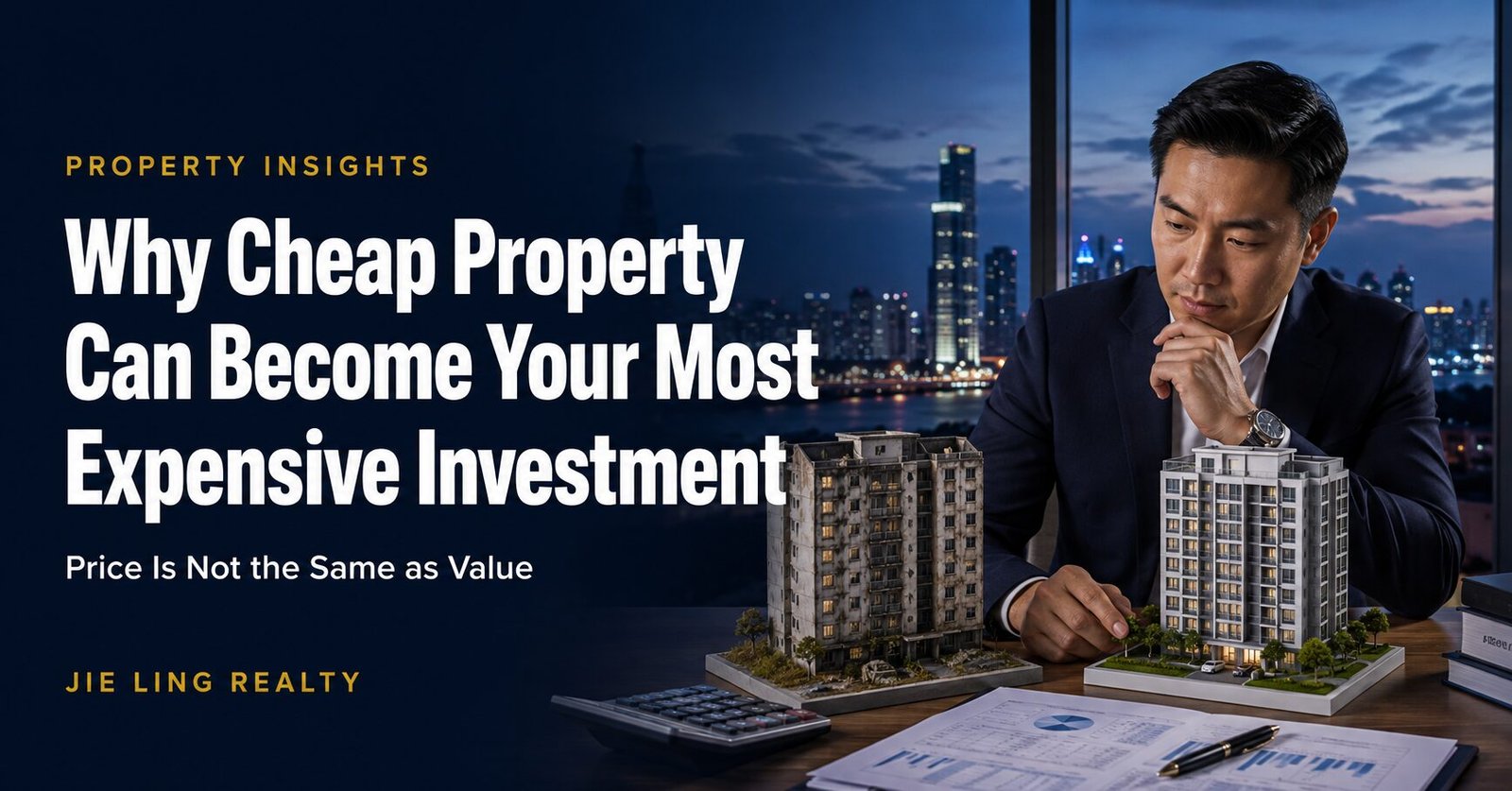
Professional investors ask a different question. Not "what's the cheapest price," but "what offers the best long-term value." Those two questions can lead to two very different properties — and two very different outcomes, years apart.
专业投资者问的是另一个问题。不是"哪里最便宜",而是"哪一套能带来最好的长期价值"。这两个问题,往往会指向两套完全不同的房子——多年后,也会带来两种完全不同的结果。
- A cheap price does not always mean good value.
- Sometimes, the cheapest purchase quietly becomes the most expensive investment.
- By the end, you'll know what professional investors actually study before buying — and why it's rarely the price.
- 价格便宜,不代表价值好。
- 有时候,最便宜的那笔购买,最后反而变成最贵的一笔投资。
- 读完这篇文章,你会知道专业投资者在买房前真正研究的是什么——而那从来不是价格。
Cheap Doesn't Mean Good Value便宜不等于价值好
Price, value, and investment quality are three different things — and mixing them up is where a lot of buyers go wrong.
价格、价值与投资质量,是三个完全不同的概念——很多买家出错,就是因为把这三者混为一谈。
Cheap Price便宜的价格
Simply a low number on a listing. It tells you what you'll pay today. It says nothing about what you'll get in return.只是房源介绍上一个较低的数字。它告诉你今天要付多少钱,却完全说明不了你将来会得到什么。
Good Value好的价值
What you receive is worth what you paid — comfortable living, genuine rental demand, a location that works. A moderately priced property can still be excellent value.你得到的东西,配得上你付出的价钱——舒适的居住体验、真实的租赁需求、一个真正好用的地段。价格适中的房子,依然可以是极好的价值。
Good Investment好的投资
A property that keeps performing after you've bought it — rented reliably, holds its value, and can be sold again without a fight. Price is only the entry point.在你买下之后,依然能持续表现良好的房子——能稳定出租、能保值,未来也能顺利转手。价格只是入场券。
The Hidden Costs Nobody Talks About没人告诉你的隐藏成本
A low price tag often hides a longer list of costs that only show up after the papers are signed.
一个低价标签背后,往往藏着一长串直到签完约才会浮现的成本。
Empty units空置单位
A cheap unit in a weak-demand location can sit vacant for months, while the loan repayment keeps going.地处租赁需求疲弱地区的便宜单位,可能空置数月,贷款却照样要还。
Poor rental demand租赁需求不足
Few tenants means repeatedly lowering the rent, or accepting a bad tenant just to fill the unit.租客稀少,只能一再降租,或被迫接受不太理想的租客。
Loan interest贷款利息
Interest accumulates every month, whether the unit is earning rental income or sitting empty.不管单位有没有在赚租金,利息每个月都照样累积。
Maintenance fees管理维修费
Lower-priced developments often have thinner maintenance budgets — deferred repairs, ageing facilities, sudden special assessments.价格较低的项目维修基金往往较薄弱——维修拖延、设施老化,甚至突然摊派额外费用。
Renovation装修费用
A lower price sometimes reflects a unit that needs real work before it's rentable or livable.较低的价格,有时正是因为这套单位还需要投入实实在在的翻新工程。
Property management物业管理
Someone still needs to manage tenants, repairs and complaints — that cost exists whether the property is cheap or expensive.仍需有人处理租客、维修与投诉,不论房子便宜还是昂贵,这笔成本都存在。
Opportunity cost机会成本
Money tied up in a poor-performing property isn't earning returns anywhere else — a real cost, even if it never appears on a receipt.资金套牢在表现不佳的房产上,无法在别处创造回报——即使不会出现在收据上,这依然是真实成本。
Difficult resale转手困难
A property with weak fundamentals attracts fewer buyers, takes longer to sell, and often has to be discounted to move.基本面薄弱的房子买家更少,成交周期更长,往往还得降价才能脱手。
Add these up over several years, and a "cheap" property can quietly cost more than a pricier one that performed well from day one.
把这些成本连年累加起来,一套"便宜"的房子,最后花的钱,很可能悄悄超过一套从一开始就表现良好、价格更高的房子。
What Professional Investors Actually Look At专业投资者真正在看什么
Experienced investors rarely start with "what's the cheapest option." They start by studying the fundamentals that determine whether a property will actually perform.
有经验的投资者,很少一开始就问"哪个选项最便宜"。他们会先研究那些真正决定一套房子未来表现的基本面。
- Jobs — are there real employers nearby creating genuine reasons for people to live in the area?
- Population growth — is the area attracting more residents, or slowly losing them?
- Infrastructure — are transport links, roads and public amenities improving, or has nothing changed in years?
- Business ecosystem — are companies investing and expanding into the area, or is it quiet?
- Rental demand — is there a real, ongoing pool of tenants who want to live or work there?
- Future supply — is a wave of similar new units about to be completed nearby?
- Accessibility — can residents comfortably reach work, schools and daily conveniences?
- Exit strategy — if this property needs to be sold in five or ten years, will there be genuine buyer demand for it?
- 就业机会 ——附近是否有真实的雇主,给人们提供住在这个地区的真实理由?
- 人口增长 ——这个地区正在吸引更多居民,还是在慢慢流失人口?
- 基础设施 ——交通网络、道路与公共配套是否在持续改善,还是多年来几乎原地不动?
- 商业生态 ——是否有企业正在这里投资、扩张,还是这里一直很安静?
- 租赁需求 ——是否存在真实、持续的租客群体,愿意在此居住或工作?
- 未来供应 ——附近是否即将完工一大批同类型的新单位?
- 出行便利性 ——居民能否轻松抵达工作地点、学校与日常生活所需?
- 退出策略 ——如果五年或十年后需要卖出,届时是否会有真实的买家需求?
A Simple Comparison一个简单的对比
Consider two fictional properties in the same general area, evaluated side by side. Neither represents a real project.
想象两套虚构的房子,位于同一个大区域内,我们把它们放在一起比较。两者均非真实项目。
- Low rental demand
- Limited appreciation potential
- Buyers report resale is difficult
- 租赁需求偏弱
- 增值潜力有限
- 据反映转手比较困难
- Strong rental demand
- Better location, growing employment nearby
- Track record of easier resale
- 租赁需求强劲
- 地段更好,附近就业持续增长
- 有更容易转手的记录
Composite illustration for teaching purposes — not a real transaction, developer or specific development.教学用合成示例——并非真实交易、发展商或特定楼盘。
On price alone, Property A looks like the obvious choice — it costs half as much. But once vacancy, weak rental income, slow appreciation and a difficult resale are factored in over several years, Property B can generate significantly better long-term returns, even at double the purchase price.
单看价格,A 单位显然是更"划算"的选择——价格只是 B 单位的一半。但一旦把空置、租金收入偏弱、增值缓慢与转手困难这几项因素,放进好几年的时间维度去算,B 单位即便购买价格是 A 单位的两倍,也很可能带来明显更好的长期回报。
The lower number on the listing was never the full picture. The full picture only appears once you look at what each property actually does after you own it.
房源介绍上那个较低的数字,从来都不是全貌。真正的全貌,要等你看清这套房子在你买下之后究竟会带来什么,才会浮现出来。
Want to Evaluate Property Like a Professional Investor?想像专业投资者一样评估房产?
This article teaches the framework. The complimentary 2026 Johor Property Investment Report applies it — a clear, data-driven look at RTS Link opportunities, JS-SEZ developments and genuine investment hotspots, in English or 中文.这篇文章教你判断的框架。免费的《2026 柔佛房产投资报告》,则以清晰、数据驱动的方式,解读 RTS 捷运的机会、新柔特区的发展与真正值得关注的投资热点,中英文任选。
- RTS Link Opportunities
- JS-SEZ Developments
- Infrastructure Growth
- Genuine Investment Hotspots
- RTS 捷运机会
- 新柔特区发展
- 基建增长
- 真正的投资热点
Buying the cheapest property doesn't automatically save money. Sometimes, the cheapest purchase becomes the most expensive investment — through vacancy, weak demand, ongoing costs, and a resale that never quite happens.
买最便宜的房子,不代表自动省钱。有时候,最便宜的那笔购买,最后反而会因为空置、需求疲弱、持续产生的成本,以及始终难以脱手,变成最贵的一笔投资。
The next time you're comparing properties, resist the urge to ask only "what's the cheapest option." Ask instead: what does this property actually offer, and what will it cost me — and earn me — over the years I hold it?
下次比较房源时,请克制住只问"哪个最便宜"的冲动。改问自己:这套房子究竟能提供什么?在我持有它的这些年里,它会让我付出什么、又能为我赚回什么?
Price is what you pay on day one. Value is what you get every day after that.价格,是你在第一天付出的数字。价值,是你此后每一天,真正得到的东西。