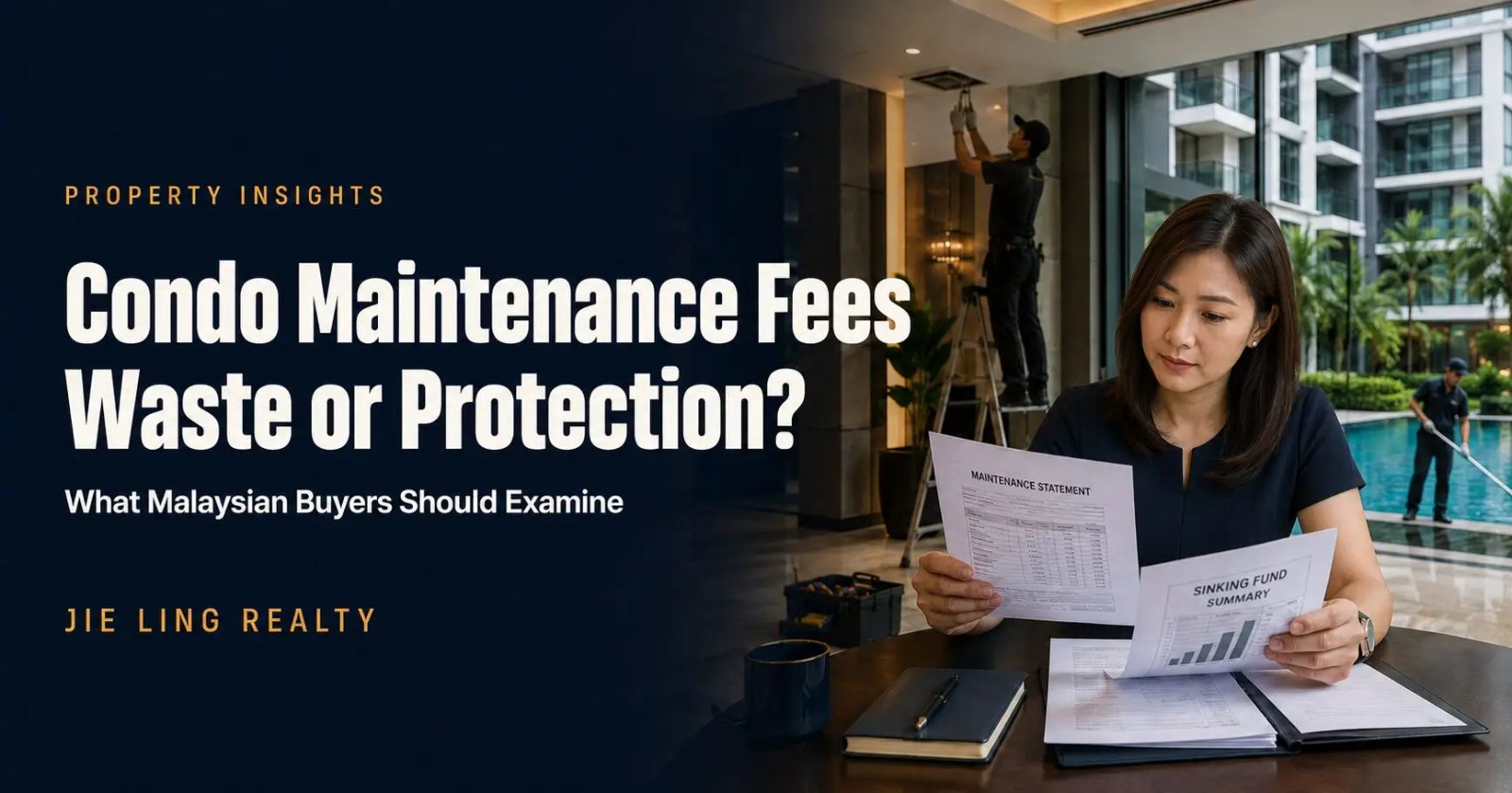
Picture two condos, both priced at RM700,000.
想象两间公寓,价格都是 70 万令吉。
Condo A has a noticeably lower monthly maintenance fee. Condo B costs more every month to maintain.
A 公寓的每月管理费明显较低。B 公寓每个月要多花一些钱来维持。
Most buyers see this and think the choice is obvious: Condo A is the better deal.
大多数买家看到这里,都会觉得答案很明显:A 公寓比较划算。
Now move the story five years forward.
现在,把时间快转五年。
Condo A's common areas look tired. The pool tiles are stained, the lifts break down more often, and management has struggled to keep up. Condo B still looks the way it did on day one — well-kept, clean, and properly run.
A 公寓的公共区域看起来疲态尽显。泳池瓷砖有污渍,电梯故障更频繁,管理层也越来越跟不上。B 公寓却还是当初的样子——维护良好,干净整洁,管理到位。
So — which owner actually saved money?
那么——到底哪位业主,才是真正省到了钱?
This is an illustrative scenario, not market data. But it captures something real: the monthly fee is only half the story.这是一个说明性的情景,并非市场数据。但它反映了一个真实的现象:每月的管理费,只是故事的一半。
- A low maintenance fee is not automatically good.
- A high maintenance fee is not automatically bad.
- What matters is what the fee actually pays for — and whether it's enough to keep the building worth owning.
- 管理费低,不代表就是好事。
- 管理费高,也不代表就是坏事。
- 真正重要的,是这笔钱到底花在了什么地方——以及它是否足以让这栋楼继续保值。
What Maintenance Fees Actually Pay For公寓管理费究竟在支付什么
A condo's maintenance fee funds the day-to-day running of the building — the things that keep it clean, safe and functioning, month after month.
公寓的管理费,支付的是这栋楼日常运作所需的一切——让它保持干净、安全、正常运转的每一个月。
- Daily operations — cleaning, security, lift servicing, landscaping, and utilities for common areas.
- Common property and facilities — corridors, lobbies, lifts, car parks, pools, gyms and gardens.
- Building management — the team (or appointed management agent) that keeps everything running and responds when something breaks.
- 日常运营 ——清洁、保安、电梯维修、园艺,以及公共区域的水电等费用。
- 公共产业与设施 ——走廊、大堂、电梯、停车场、泳池、健身房与花园。
- 物业管理 ——负责让一切正常运转、出状况时及时处理的管理团队(或委任的管理代理)。
In Malaysia, this is usually overseen by a Joint Management Body (JMB) before strata titles are issued, and later by a Management Corporation (MC) once they are. Either way, the fee is what keeps the building livable today.
在马来西亚,这通常在分层地契发出之前由联合管理机构(JMB)负责,地契发出之后则交由管理机构(MC)接手。不管是哪一个阶段,这笔费用,都是让这栋楼今天依然宜居的关键。
Maintenance Fee vs. Sinking Fund管理费 vs. 维修储备金
These two terms often get confused, but they do very different jobs.
这两个名词经常被混为一谈,但它们的作用完全不同。
The maintenance fee is a recurring monthly cost that keeps the building running today — cleaning, security, utilities, minor repairs.
管理费是一笔按月缴纳的经常性费用,用来维持这栋楼今天的正常运作——清洁、保安、水电与小型维修。
The sinking fund is a separate reserve, set aside specifically for major, long-term works — repainting the facade, waterproofing, lift replacement, or structural repairs. It's the building's savings account for the expensive things that only happen once every several years.
维修储备金则是一笔独立的储备资金,专门用于重大的长期工程——外墙重新粉刷、防水工程、电梯更换,或结构维修。它就像这栋楼的储蓄账户,专门用来应付那些每隔好几年才会发生一次、花费不菲的大工程。
Why the Cheapest Fee Is Not Automatically the Best为什么费用最低,不代表最好
A low fee can mean efficient management. It can also mean a building that's quietly underfunded — cutting corners on cleaning, delaying repairs, or simply not collecting enough to cover what the building actually needs.
低费用,可能代表管理高效。但也可能代表这栋楼正在悄悄地资金不足——清洁打折扣、维修一拖再拖,或者收的钱根本不够应付这栋楼真正的需求。
A high fee isn't automatically better either. It only makes sense if the money is actually going toward good management, real upkeep, and a healthy sinking fund — not being collected without a clear plan for how it's spent.
费用高,也不代表就一定更好。只有当这笔钱确实用在了良好的管理、真实的维护与健康的维修储备金上,才有意义——而不是收了钱,却没有清楚的使用规划。
The number on its own doesn't tell you which building you're looking at. You have to look at what's behind it.
单看这个数字,分辨不出你面对的是哪一种大楼。你得看清数字背后的东西。
Buyer A vs. Buyer BA 买家 vs. B 买家
The two condo owners from our opening story made their decision in very different ways. Here's what separated them.
开头那两位业主,是用截然不同的方式做出决定的。以下是他们之间真正的差别。
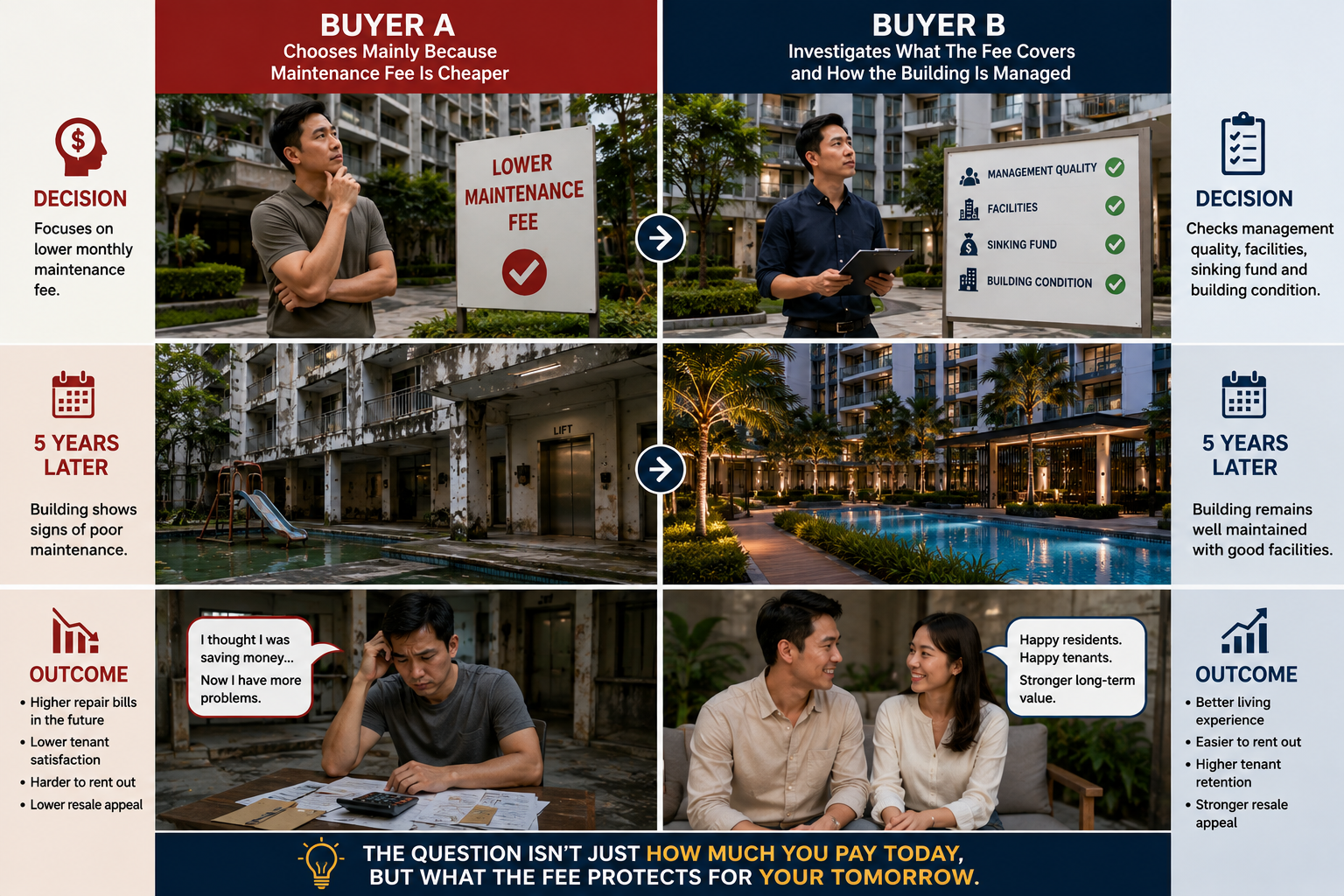
Buyer A chose mainly because the maintenance fee was cheaper. Buyer B investigated what the fee actually covered and how the building was managed.A 买家主要因为管理费较便宜而做出选择。B 买家则去了解了这笔费用实际涵盖什么,以及这栋楼的管理状况。
The Building Value Protection Framework建筑价值保护框架
Put together, maintenance fees and the sinking fund do one job: they protect the value of your property, today and years from now.
管理费与维修储备金合在一起,做的是同一件事:保护你房产的价值——今天如此,多年后依然如此。
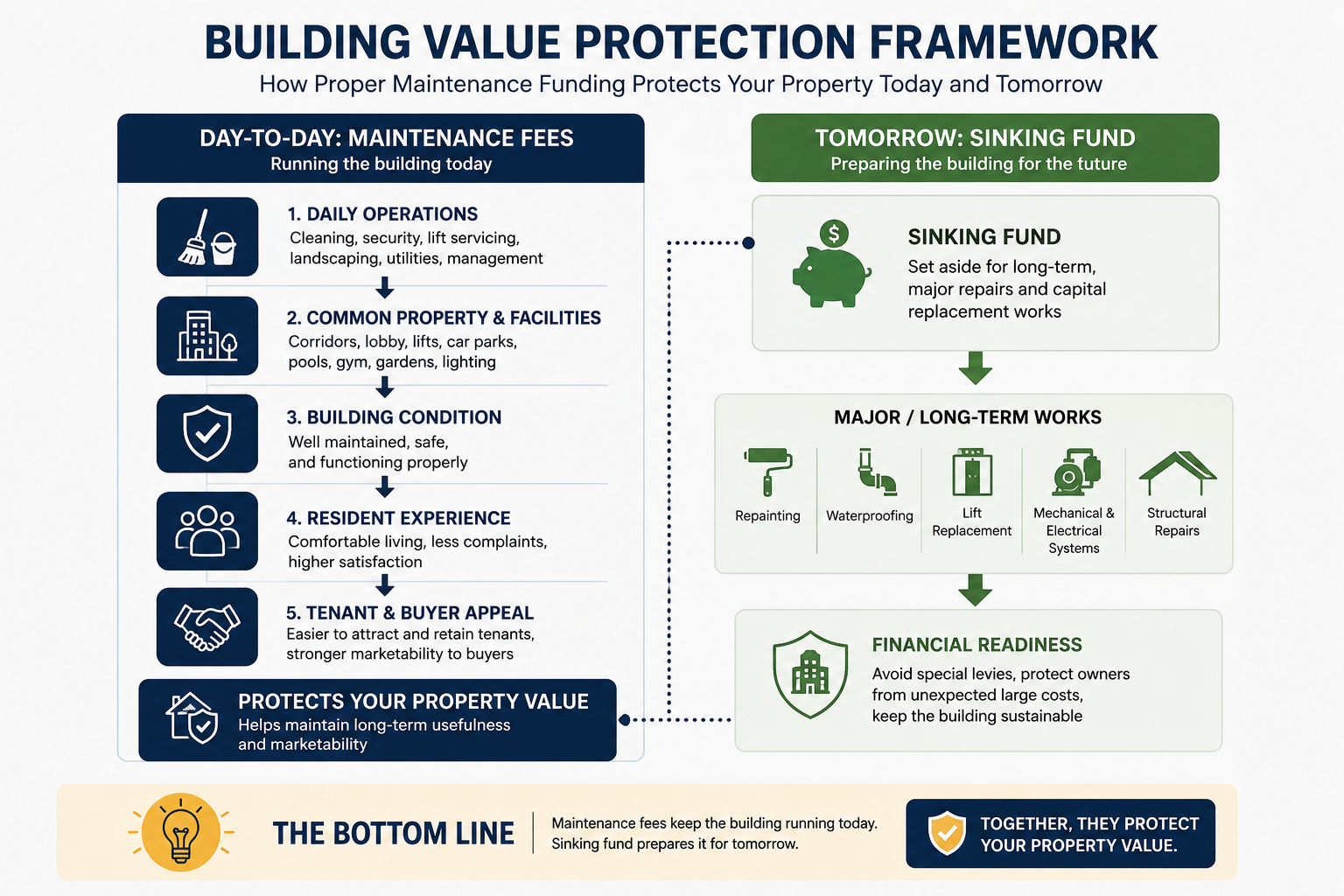
Maintenance fees run the building today. The sinking fund prepares it for tomorrow. Together, they protect your property value.管理费维持大楼今天的运作,维修储备金则为明天做好准备。两者相加,共同保护你房产的价值。
How Maintenance Costs Affect Investment Returns管理费如何影响投资回报
For investors, the maintenance fee is a direct line item against rental income — it's part of what turns gross rent into net rental yield. A property with a poorly managed building can also struggle to attract tenants at all, regardless of the fee.
对投资者而言,管理费是直接冲抵租金收入的一项开支——它是把毛租金转化为净租金回报率的其中一环。而一栋管理不善的大楼,不管费用高低,往往连租客都难以吸引。
A well-run building with a fair fee tends to hold tenant demand, resale interest, and its condition — all of which matter far more to long-term returns than the fee alone. This is the same principle we cover in Why Rental Demand Matters More Than Launch Discounts: a lower number today doesn't automatically mean a better outcome later.
一栋管理得当、收费合理的大楼,往往能维持租赁需求、转手吸引力与整体状况——这些对长期回报的影响,远比单看费用高低更重要。这与我们在《为什么租赁需求比开盘折扣更重要》中提到的原则相同:今天数字更低,不代表将来的结果更好。
Lowest Fee vs. Sustainable Fee最低费用 vs. 可持续费用
Here's the difference in practice — not as a market benchmark, but as a way of thinking about what you're actually evaluating.
以下是两者在实际操作中的差别——这不是一个市场基准,而是一种帮助你判断的思考方式。
| What to Check检查项目 | Lowest Fee最低费用 | Sustainable Fee可持续费用 |
|---|---|---|
| Sinking fund维修储备金 | ✗ Often thin or unfunded往往不足或根本没有 | ✓ Set aside consistently for major works持续为重大工程预留资金 |
| Common area upkeep公共区域维护 | ✗ Repairs deferred or delayed维修一再拖延 | ✓ Addressed on a regular schedule按固定周期处理 |
| Special levies特别摊派费 | ✗ Higher risk of sudden large bills突发大额摊派的风险较高 | ✓ Lower risk — costs are planned for风险较低——成本已提前规划 |
| Building condition, 5–10 years on5–10 年后的楼况 | ✗ Tends to age faster往往老化得更快 | ✓ Holds its condition状况维持得更好 |
| Tenant & resale appeal租客与转手吸引力 | ✗ Can quietly decline over time可能随时间悄悄下滑 | ✓ Tends to stay stronger往往能维持得更好 |
This is a general comparison of patterns to look for — not a market benchmark or a guarantee for any specific building.这是一份帮助你留意常见模式的一般性对比——并非市场基准,也不代表对任何特定楼盘的保证。
Before You Buy Into Any Strata Property在买下任何一间分层地契物业之前
Keep this on your phone. Run it before you sign anything.
把它存在手机里,签字前先过一遍。
What exactly does the maintenance fee cover, and does it match what I see on-site?管理费具体涵盖哪些项目?和我实地看到的情况是否相符?
Is there a sinking fund, and is it being funded consistently?是否设有维修储备金?是否持续在存入资金?
Has the building had any recent special levies, and why?这栋楼近期是否有过特别摊派费?原因是什么?
Is the building managed by a JMB or an MC, and how responsive is management?这栋楼是由 JMB 还是 MC 管理?管理方的响应速度如何?
Do the common areas look properly maintained today — not just in the marketing photos?公共区域今天看起来维护得当吗?不是只看宣传照片。
How does this fee affect my net rental yield once I factor it in?把这笔费用算进去之后,会如何影响我的净租金回报率?
The maintenance fee is not just an expense — it's what pays to protect your property's value. The question isn't just how much you pay today, but what the fee protects for your tomorrow.管理费不只是一项开销——它是用来保护你房产价值的费用。问题从来不只是今天要付多少钱,而是这笔钱,能为你的明天保护住什么。
Want to Evaluate Property Like a Professional Investor?想像专业投资者一样评估房产?
This article teaches you how to judge a building's management. The complimentary 2026 Johor Property Investment Report goes further — a clear, data-driven look at RTS Link opportunities, JS-SEZ developments and genuine investment hotspots, in English or 中文.这篇文章教你如何判断一栋楼的管理水平。免费的《2026 柔佛房产投资报告》则更进一步,以清晰、数据驱动的方式,解读 RTS 捷运的机会、新柔特区的发展与真正值得关注的投资热点,中英文任选。
- RTS Link Opportunities
- JS-SEZ Developments
- Infrastructure Growth
- Genuine Investment Hotspots
- RTS 捷运机会
- 新柔特区发展
- 基建增长
- 真正的投资热点
Condo A and Condo B never actually cost the same. One owner paid less each month and more in the long run. The other paid more each month and kept a property that held its value.
A 公寓与 B 公寓,从来不是同样的价格。一位业主每个月付得少,长期却付得更多;另一位业主每个月付得多,却守住了一间保值的房产。